See prices From 123 EUR · Free cancellation available
Contents
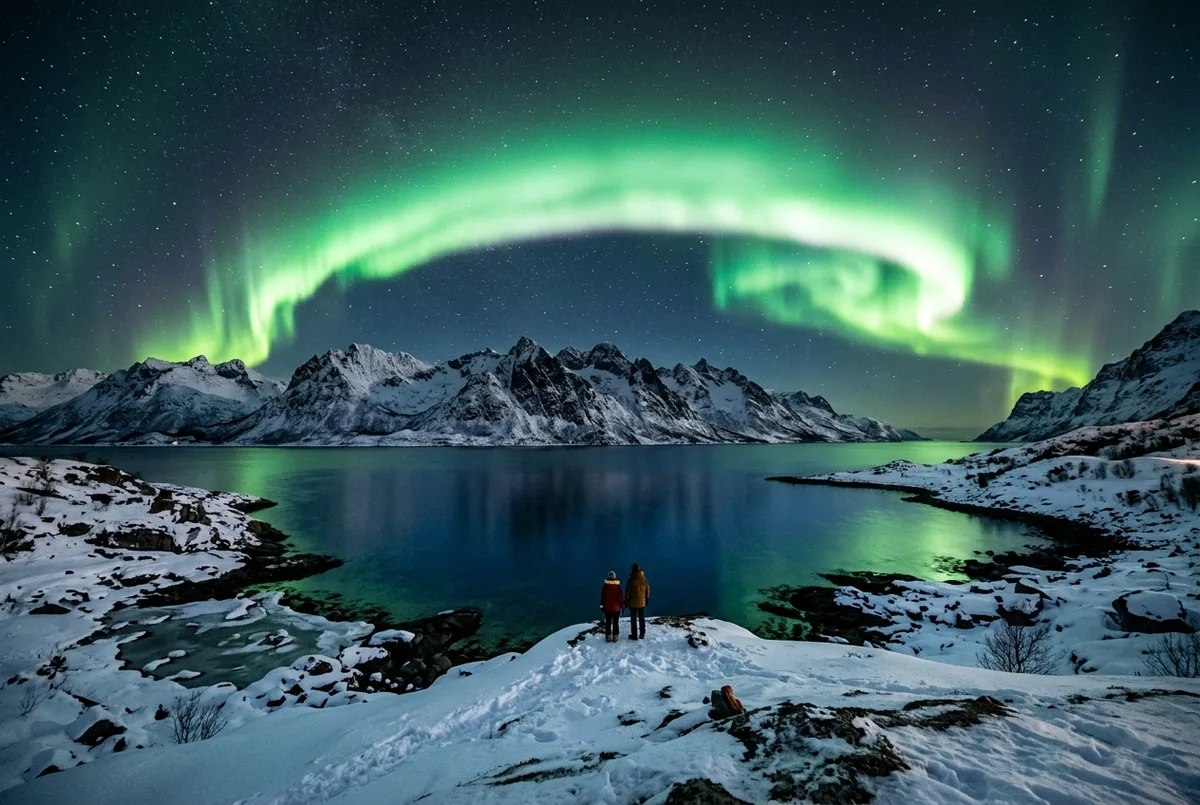
The honest answer to best place to see northern lights is that there is no single winner. Norway, Alaska, Iceland and Finnish Lapland all sit inside the same reliable aurora belt, and what actually separates a great night from a wasted one is dark sky, high latitude and low light pollution on the specific evening you are out, not which country’s flag is on the brochure. Here is what I would actually do before booking any northern lights tour or ticket: stop searching for a single best destination and instead pick based on how the four real options differ on trip length, cost and what you want to do during the day, since all four give you a genuine shot at seeing the aurora when the sky cooperates. This guide covers the three criteria that actually decide a good viewing spot, how the four major destinations stack up against each other, and when to go regardless of where you land. Every destination below is backed by real, price-checked products rather than guesswork, so see the full lineup of northern lights tours and tickets by destination once you have narrowed down where you want to go.
What Actually Makes a Place “Best” for Seeing the Northern Lights?
Three factors decide whether a location gives you a genuine shot at the aurora: how far north it sits, how dark the sky gets at night, and how much artificial light pollution sits between you and the horizon.
I would rank these in that order of importance. Latitude sets the ceiling on how often the aurora forms overhead at all, dark hours set how much of the night you actually have to work with, and light pollution determines whether a display that does appear is visible or washed out by city glow. A location that scores well on all three, rather than one that is merely famous, is what I would actually call the best place to see the northern lights.
Check prices & dates
Ready to visit?
Book your tickets in advance: popular time slots sell out.
Why Does Latitude Matter More Than a Specific City?
The aurora forms in an oval-shaped band around the magnetic poles called the auroral oval, and a location’s chances of sitting inside that band on a given night rise sharply the closer it sits to the Arctic Circle.
I would not fixate on a single city’s reputation over its actual latitude. Tromso, Fairbanks, Reykjavik and Rovaniemi all sit inside or very close to the auroral oval on an average clear night, which is exactly why they anchor the four destinations covered on this site. A lower-latitude location, even one with excellent marketing, simply sees the aurora far less often, regardless of how good its tour operators are.
How Much Does Light Pollution Really Cost You?
Light pollution can hide a genuinely active aurora display almost entirely, turning what would be a vivid green arc under dark sky into a faint, easily missed glow near a city’s edge.
This is exactly why every real tour featured on this site drives away from its home city before stopping to watch, rather than viewing from a hotel balcony downtown. I would treat a guide’s willingness to drive to genuinely dark sky as one of the most important things to check before booking any aurora tour, since a fixed viewing point close to town can quietly undercut even a strong night of solar activity.
Which Destinations Actually Meet These Criteria?
Four destinations combine strong latitude, long dark-season nights and a mature tour market willing to chase clear sky: Norway’s Tromso, Alaska’s Fairbanks, Iceland’s Reykjavik and Finland’s Rovaniemi.
Husky, reindeer and glass-igloo scene alongside the aurora
I would use trip length as the first filter when picking between these four. If you only have a long weekend, Iceland is the realistic choice. If you have a full week and want the most immersive Arctic experience, Norway or Alaska both deliver. If you are traveling with young children, Lapland’s daytime activity scene gives the trip a backbone that does not depend entirely on the sky cooperating.
How Do These Four Destinations Compare on Cost?
Iceland and Norway both run evening aurora tours from roughly the same budget-tier price point, Alaska’s Fairbanks products trend higher once you factor in a longer season and the Arctic Circle day trip format, and Lapland’s guaranteed-refund structure sits in the middle of that range.
I would not treat the sticker price of a single tour as the whole cost comparison, though. Flight cost matters just as much, and it usually favors Iceland and Norway over Alaska for a traveler flying from Europe, while flipping the other way for someone flying from North America. My guide to budget northern lights tours breaks down the real price spread across all four destinations in more detail, including what actually drives the cost up or down within each one.
Is a Guided Tour Always Better Than Trying to See the Aurora on Your Own?
For most first-time visitors, yes. A guided tour’s real value is not the vehicle or the hot cocoa, it is a guide actively reading live cloud radar and driving toward clear sky, which is genuinely difficult to replicate on your own without local knowledge of the roads and the weather patterns. → See current availability
I would only consider a self-drive attempt if you already have real winter driving experience in the specific region you are visiting, and even then I would treat a guided tour as the safer, higher-odds default rather than something only for tourists who cannot rent a car. My comparison of a guided tour versus self-drive aurora hunting goes through the full tradeoff, including the genuine cases where a rental car makes sense.
Is There a Single Best Spot Within Each Destination?
Not really, and I would be skeptical of any source that names one exact viewpoint as the definitive best spot in any of these four regions. Every real tour on this site drives to wherever that specific night’s forecast points, precisely because a fixed “best spot” changes constantly with cloud cover.
I would trust a forecast-led guide over a fixed viewpoint every time. Tromso’s guides will cross into Finland if the coast clouds over, Reykjavik’s operators route toward whichever direction Icelandic meteorologists forecast as clearest, and Rovaniemi’s guaranteed tour will drive up to 200 km if that is what it takes. A famous named viewpoint is only as good as that night’s weather, and a good guide’s real advantage is not knowing one spot, it is knowing how to find whichever spot is clear that night.
Does Weather Variability Differ Meaningfully Between These Destinations?
Yes, and it is one of the more overlooked differences between these four. Iceland’s coastal weather shifts fastest, Alaska’s interior climate around Fairbanks is the driest and most stable, Norway’s coast sits somewhere between the two, and Lapland’s inland position keeps it relatively steady as well.
I would weigh this more heavily if you only have one or two nights to work with. A destination with steadier weather, like Fairbanks or Rovaniemi, gives a single scheduled tour a better real chance of paying off, while Iceland’s faster-changing conditions are exactly why a free retry ticket matters so much there. If your trip only allows for one attempt, I would lean toward the more stable climates; if you have three or more nights to spread across, Iceland’s variability matters far less, since a forecast-led guide has more chances to find a gap.
Should You Trust a Destination’s Reputation or Its Actual Numbers?
I would trust the numbers over the reputation every time. A destination’s fame in travel media does not always track with its real latitude, dark-hour count or typical cloud cover on a given night, and marketing budgets do not change the physics of where the aurora actually forms. → Check dates and prices
This is part of why this site only features four destinations rather than every location that claims strong aurora viewing. Norway, Alaska, Iceland and Lapland all genuinely meet the latitude, darkness and light-pollution criteria laid out earlier on this page, backed by real, price-checked tour products rather than a marketing claim alone. I would treat any destination that cannot show you a real, bookable, forecast-led tour with the same skepticism you would apply to an unverified review.
Does the Best Time of Year Matter as Much as the Best Place?
Yes, arguably more. The strongest destination in the world will not show you the aurora in June, when the sky never gets dark enough at high latitudes, regardless of latitude or light pollution.
I would treat timing as at least as important a decision as destination. My full guide to the best time to see the northern lights covers the September-to-April dark season in detail and how the nightly viewing window shifts across it, and it is worth reading before you lock in dates for any of the four destinations above.
How Does Solar Activity Change What Counts as “Best” Right Now?
The sun runs on a roughly 11-year solar cycle, and aurora displays tend to be stronger and more frequent during the years around solar maximum than during a quiet stretch of the cycle. → Get the latest ticket prices
I would not let a quiet solar-activity year talk you out of a trip, though. Even during weaker years, all four destinations covered here still deliver real sightings on genuinely clear, dark nights, since the underlying geography, latitude, darkness and low light pollution, does not change with the solar cycle. Strong solar activity mostly widens your margin for error on a night with some cloud cover, rather than being a strict requirement for seeing anything at all. My guide to solar activity and northern lights forecasts covers the Kp-index and how to read a real aurora forecast if you want to go deeper on this.
Should Budget or Trip Length Decide Your Destination More Than Reputation?
For most travelers, yes. I would weigh trip length and budget well above brand reputation when picking between these four, since all four genuinely deliver on the same core promise once you are on a clear night with a decent guide.
Iceland wins on short flight times and trip flexibility. Norway and Alaska both reward a longer, more immersive week. Lapland adds real daytime value for families. I would pick based on which of those trade-offs fits your actual trip, not on which destination has the biggest marketing budget behind it, since the fundamentals that make a place good for the aurora are the same everywhere on this list.
Is It Worth Trying to Combine Two Destinations in One Trip?
For most travelers, no, and I would actively steer you away from it on a first trip. Norway, Alaska, Iceland and Lapland are far enough apart that combining two of them usually means burning a full travel day or more on flights rather than actual aurora hunting, and that time comes directly out of your nightly attempts.
I would only consider combining two destinations on a longer trip of ten days or more, and even then I would pick two that share a reasonable flight connection rather than the two that sound most appealing on paper. A single well-chosen destination with three or four real evening attempts beats two destinations with one rushed attempt each almost every time, since your odds depend far more on the number of nights you actually get out under a dark sky than on how many countries your itinerary touches.
My Honest Recommendation for Choosing Where to Go
If someone asked me to pick one destination with zero other constraints, I would lean toward Norway for the most complete overall package: strong latitude, a milder coastal climate than Alaska at the same latitude, and a deep bench of real tour operators in Tromso. But that is a preference, not a rule.
I would tell a first-time visitor with only a long weekend to book Iceland instead, and a family with young kids to strongly consider Lapland over any of the other three. The honest truth is that all four destinations on this site meet the real criteria that make a place worth visiting for the aurora, and the right pick genuinely comes down to your trip length, budget and who you are traveling with, not a hidden best answer I am withholding.
Whichever of the four you land on, I would rather you book one destination with confidence than spend weeks trying to find a definitive ranking that does not really exist. Read the destination-specific guide once you have narrowed it down, book a real forecast-led tour rather than trying to guess on your own, and give yourself more than one night out if your schedule allows it. Those three decisions matter far more to your actual odds than which of the four you ultimately choose.
Frequently Asked Questions
Is there one single best place in the world to see the northern lights?
No single place wins outright. Norway, Alaska, Iceland and Finnish Lapland all sit inside the reliable aurora belt, and the best choice depends on your trip length, budget and travel companions more than any ranking.
Does light pollution really make a big difference?
Yes. A genuinely active aurora display can be almost invisible from inside a lit-up city and clearly visible just a short drive away, which is why every real tour featured on this site leaves the city before stopping to watch.
Is latitude more important than the specific city I fly into?
Generally yes. Tromso, Fairbanks, Reykjavik and Rovaniemi all sit inside or close to the auroral oval, and a good guide’s ability to chase clear sky within that region matters more than which exact city serves as your base.
Do I need to travel during a strong solar activity year to see the aurora?
No. Strong solar years widen your margin for error, but all four destinations here deliver real sightings on clear, dark nights regardless of where the roughly 11-year solar cycle currently sits.
Which destination is best for a short trip of three or four days?
I would pick Iceland for a short trip, since Reykjavik’s short flight times and dense small-group tour market make it the easiest of the four to fit into a long weekend.