See prices From 123 EUR · Free cancellation available
Contents
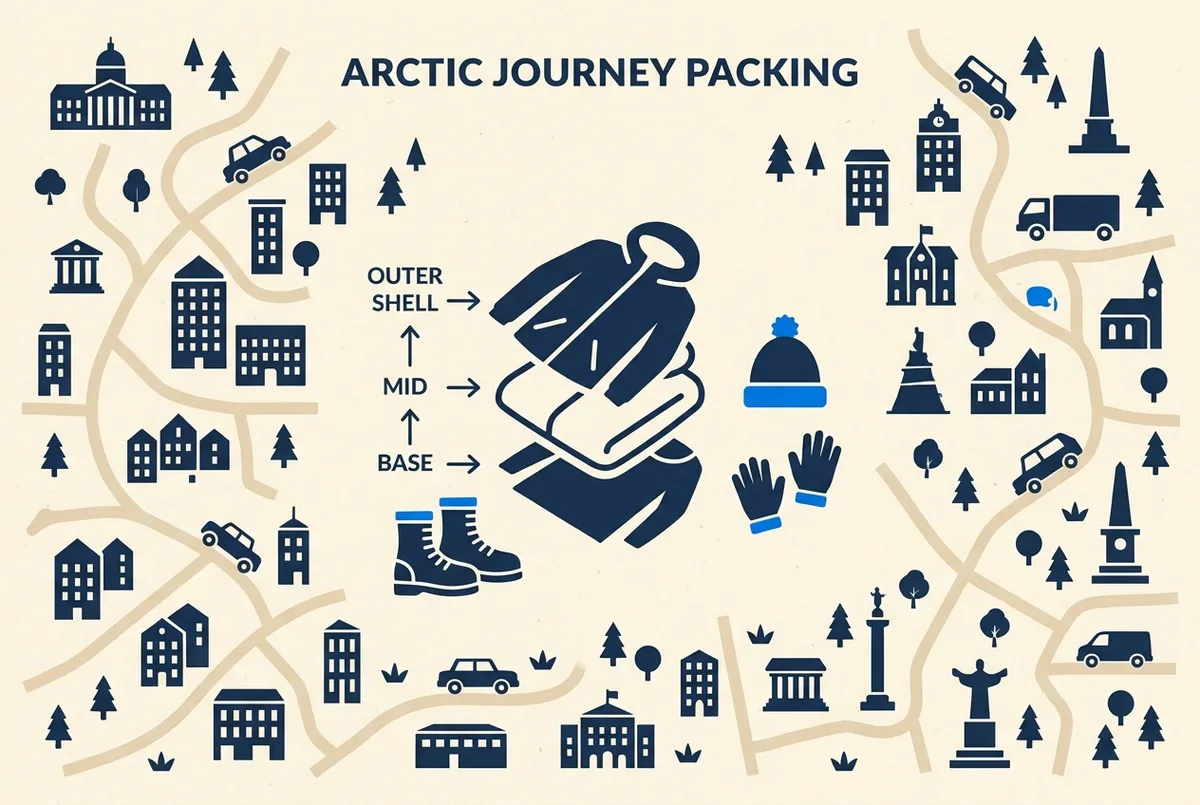
What to wear on a northern lights tour comes down to one core idea: you will be standing mostly still outdoors for an hour or more in temperatures that commonly run from about -10 to -25 degrees Celsius, and standing still in the cold is a very different challenge than walking or hiking in it. Here is what I would actually pack: a proper three-layer system, insulated waterproof boots, and a hat and gloves that are not an afterthought, since those last two are what most first-time visitors underestimate before a northern lights tour. This guide walks through the exact layering system I would use, what tour operators typically include, and the small details that make the difference between an hour of genuine discomfort and a night you actually enjoy.
Why Does Standing Still Change What You Should Wear?
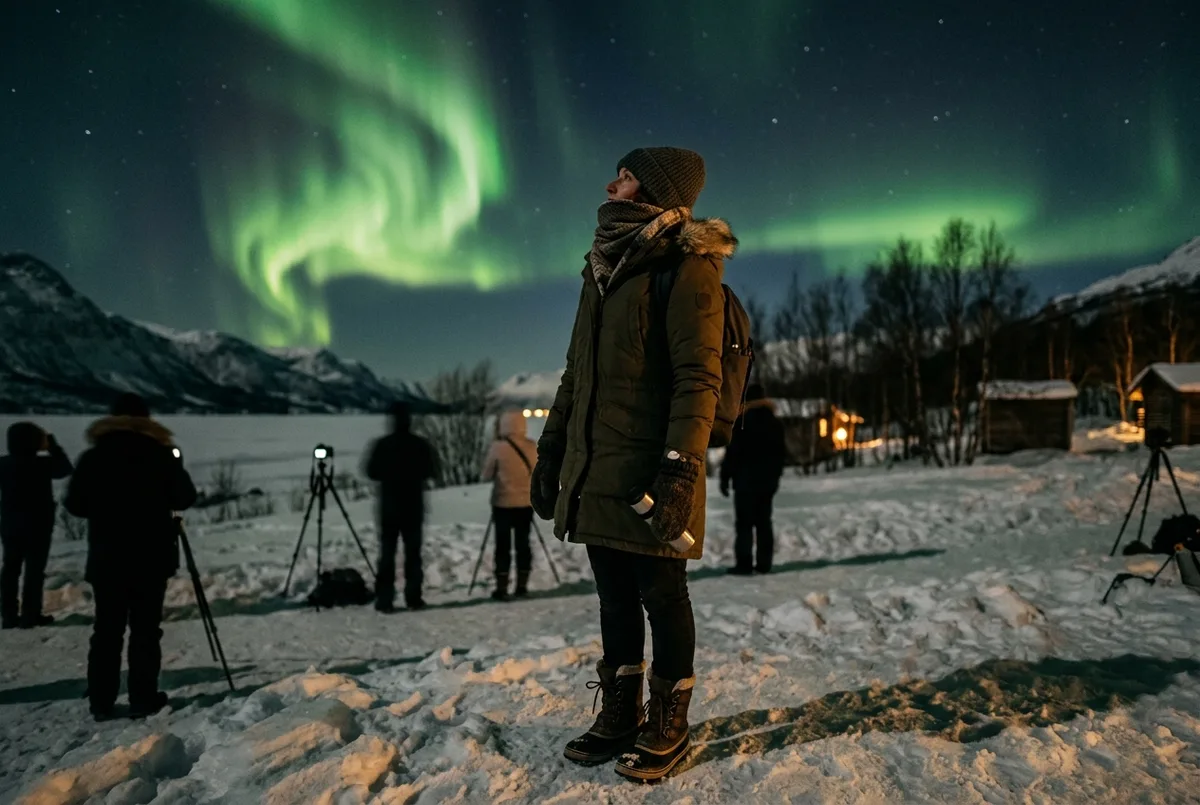
Walking and hiking generate body heat that keeps you comfortable in layers that would otherwise feel thin, but an aurora watch mostly involves standing or sitting still at a viewing camp, which removes that built-in heat source entirely.
I would pack noticeably warmer than you think you need for exactly this reason. A layering system that felt perfectly warm on a brisk winter walk earlier in your trip can leave you shivering after 40 minutes of standing still waiting for the sky to clear.
Check prices & dates
Ready to visit?
Book your tickets in advance: popular time slots sell out.
A moisture-wicking synthetic or merino wool base layer, top and bottom, is the right starting point, since cotton traps sweat against your skin and actually makes you colder once you stop moving.
I would avoid cotton entirely for how to dress for aurora hunting, even for a single evening. Merino wool base layers are a genuine worthwhile investment if you plan to do any other winter travel, since they regulate temperature far better than a basic cotton undershirt or thermal.
What Mid-Layer and Outer Shell Actually Work?
A fleece or down mid-layer for insulation, topped with a windproof and waterproof outer shell, is the combination I would rely on. Wind chill at an open viewing site can make the effective temperature feel significantly colder than the actual air temperature.
I would prioritize a windproof outer layer over raw insulation thickness if you have to choose. A thick jacket that lets wind through will leave you colder than a thinner, genuinely windproof shell layered over a good mid-layer.
Do I Need to Buy a Special Winter Suit, or Will My Regular Coat Work?
Many tour operators, including several featured on this site, offer a winter suit rental option, and I would take it if your regular winter coat is not rated for genuinely sub-zero, wind-exposed conditions.
I would not assume a stylish city winter coat is warm enough for a stationary Arctic viewing camp. A rental suit is specifically built for standing still in extreme cold, which is a different design goal than a coat meant for walking between a car and a building.
What About Footwear?
Insulated, waterproof winter boots rated for genuinely cold temperatures matter more than almost any other single item on your northern lights tour packing list, since cold feet are usually what ends a viewing session early.
I would size boots to fit comfortably over a thick wool sock without pinching, since cutting off circulation with tight boots makes your feet colder, not warmer. Thin sneakers or fashion boots, even insulated-looking ones, are not a substitute for genuine winter footwear on a night that can run several hours.
Are Disposable Hand and Foot Warmers Worth Packing?
Yes, and I would call them one of the best value items on this entire list. Small disposable chemical warmers slip inside gloves or boots and add hours of extra warmth for very little weight or cost in your luggage.
I would pack several pairs rather than just one, since a viewing session can run several hours and a single warmer starts losing effectiveness well before the night ends. They are widely available at outdoor stores and pharmacies before you travel, and I would rather over-pack these than run out partway through your best chance at a clear night.
Which Accessories Actually Matter Most?
A warm hat that covers your ears, insulated gloves or mittens, and a neck gaiter or scarf are the three accessories I would never skip, since exposed skin loses heat fastest and these are the items visitors most commonly forget or underpack.
I would pack a thin glove liner under a thicker mitten if you plan to use a camera or phone, since fully removing gloves to operate a touchscreen in sub-zero wind gets uncomfortable fast. Touchscreen-compatible glove liners solve this specific problem well.
What Do Tour Operators Typically Provide Versus What You Should Bring Yourself?
Many of the real Tromso and Fairbanks tours featured on this site include a rental winter suit, insulated boots in some cases, chairs at the viewing site and hot drinks to help you stay warm between sightings, but gloves, a proper hat and your base layers are almost always left to you.
I would check the specific inclusion list on your booked tour before assuming a rental suit covers everything. A winter suit rental solves the biggest single problem, an outer shell rated for genuinely extreme cold, but it does nothing for your hands, head or feet, which is exactly where most visitors still end up cold even after renting one.
Does the Destination Change What You Should Pack?
Somewhat. Norway’s Tromso benefits from the Gulf Stream, which keeps temperatures milder than interior Alaska at a similar latitude, while Fairbanks and Rovaniemi can see drier, sharper cold that feels different even at a similar thermometer reading.
I would still pack for the coldest realistic scenario regardless of destination, since a single unusually cold night can catch out a visitor who packed for the average rather than the extreme. A proper layering system works across all four destinations featured on this site, so I would not meaningfully change my packing list based on which country I was visiting, only how many spare layers I brought as backup.
My Honest Packing Recommendation
If I had to prioritize a short packing list, I would put insulated waterproof boots and a proper hat and gloves ahead of the jacket itself, since those are the items visitors underestimate most and the ones that end an aurora watch early when they are missing.
I would also check what your specific tour includes before over-packing. Several real Tromso and Fairbanks tours featured on this site include a rental winter suit, chairs and hot drinks at the viewing site, which changes what you genuinely need to bring versus what the operator already covers.
Frequently Asked Questions
How cold does it actually get on a northern lights tour?
Viewing conditions commonly run from about -10 to -25 degrees Celsius depending on the destination and night, and standing still at that temperature feels considerably colder than walking through it. → See current availability
Do I need to buy a winter suit before my trip?
Not necessarily. Several real tour operators, including options featured on this site, offer a winter suit rental at the viewing site, which is often more practical than buying one for a single trip.
What is the biggest mistake people make when packing for an aurora tour?
Underestimating how cold standing still gets compared with walking or hiking, and skimping on boots, hat and gloves in favor of focusing entirely on the outer jacket.
Should I bring gloves even if the tour provides a winter suit?
Yes. Most rental winter suits do not include gloves, so pack your own insulated pair, ideally with touchscreen-compatible liners if you plan to use a phone or camera.
Is cotton clothing okay for a northern lights tour?
No. Cotton traps sweat and gets cold once you stop moving. A moisture-wicking synthetic or merino wool base layer performs far better for a stationary viewing session.
Does the destination change what I should pack?
Only slightly. Norway’s Tromso runs a bit milder thanks to the Gulf Stream, while interior Alaska and Finnish Lapland can feel sharper at a similar temperature, but I would still pack for the coldest realistic night regardless of which of the four destinations you are visiting.