Alaska Northern Lights Tours: Where to Go and What to Expect
See prices From 313 EUR · Free cancellation available
Contents
An alaska northern lights tour built around Fairbanks is, in my view, one of the strongest aurora bets in North America, and the interior’s dry, continental winter climate is the real reason why. Here is what I would actually do before booking any northern lights tour: base yourself in Fairbanks rather than Anchorage, give the trip at least three nights, and pick one tour format that matches how much daytime adventure you want alongside the sky-watching. Alaska’s edge comes down to geography and weather, not marketing. Fairbanks sits close enough to the auroral oval that a clear night here is a genuinely strong bet, and the interior’s low humidity means far fewer of the persistent cloud systems that can shut down a coastal destination for days at a time. This guide covers why Fairbanks works as a base, what a typical aurora night looks like across the different tour formats, when to go, and how the real numbers compare to Norway or Iceland. Before you narrow it down to one product, it is worth seeing how every option on this site actually compares, so see how every northern lights tour and ticket on this site compares by price before you commit to a single booking.
Why Is Interior Alaska One of the Most Reliable Places to See the Northern Lights?
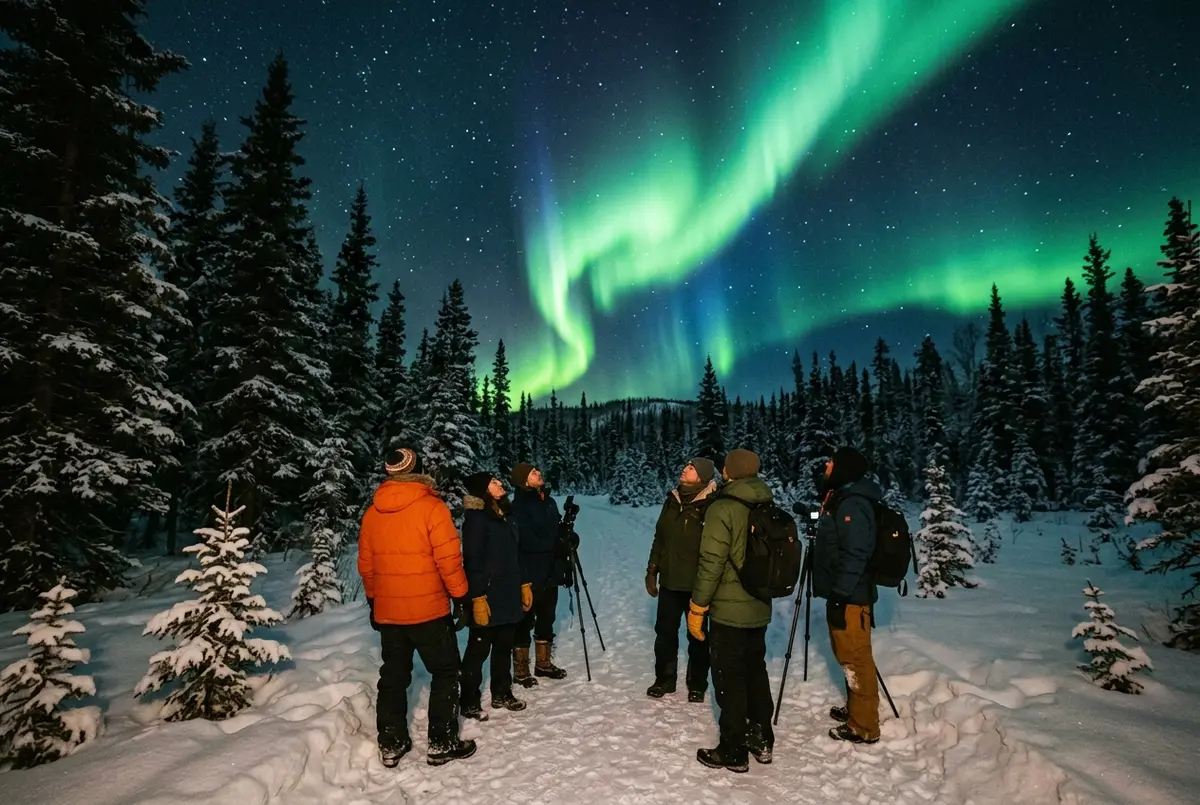
Fairbanks sits directly under the auroral oval on most clear nights from late August through April, and the interior’s continental climate, far from any moderating ocean influence, produces some of the driest, most consistently clear winter skies of any major aurora destination. As Wikipedia’s overview of the aurora explains, the display forms when charged solar particles collide with the upper atmosphere near the magnetic poles, and Fairbanks happens to sit almost directly beneath that band.
I would rank interior Alaska ahead of most coastal aurora destinations on cloud cover alone. Norway and Iceland both benefit from milder Gulf Stream weather, but that same ocean influence brings more frequent cloud systems rolling through. Fairbanks trades milder temperatures for dry, stable, often bitterly cold air, and that tradeoff genuinely pays off in clear-sky nights. I would not assume “colder” automatically means “worse trip,” since a clear minus 20 degree night with a strong display beats a mild, cloudy one every time for anyone who came specifically to see the sky.
Check prices & dates
Ready to visit?
Book your tickets in advance: popular time slots sell out.
What Makes Fairbanks the Right Base for an Alaska Northern Lights Tour?
Fairbanks earns its reputation less from having Alaska’s single strongest aurora activity and more from being the only interior Alaska city with the flight connections, lodging density and mature tour market to make a short trip realistic. Anchorage sits further south, at a latitude with meaningfully lower sighting odds, and Utqiagvik or Coldfoot, while further north, carry a much thinner tour infrastructure to fall back on.
My honest take is that Fairbanks wins this tradeoff for almost anyone reading this. You land at Fairbanks International Airport, you have a genuine choice of aurora tour formats the same evening, and you are not burning travel days reaching a more remote viewing point first. My logistics guide to getting to Fairbanks for the northern lights walks through flight routes and why I would build in a few consecutive nights rather than one.
What Does a Night on an Alaska Aurora Tour Actually Look Like?
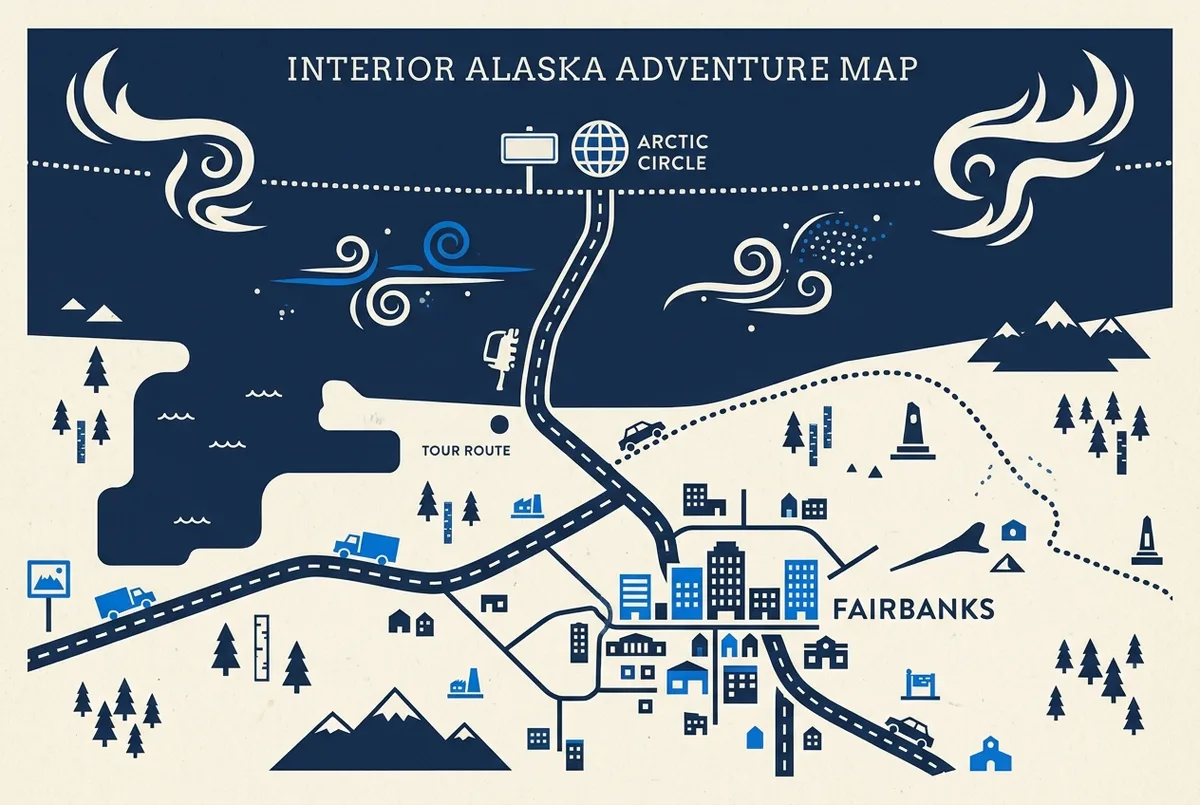
Alaska’s aurora tour market splits into three genuinely different formats rather than one standard shape, and that is different from what you find in Norway or Iceland. A lodge-based tour brings you to a single, purpose-chosen property with large north-facing windows and lets you wait in warmth, stepping outside once the display picks up. A combo tour pairs the aurora watch with a daytime activity like a Chena Hot Springs soak and the Aurora Ice Museum. A full-day Arctic Circle expedition drives the Dalton Highway north, crosses 66.5622 degrees north with a certificate to prove it, and folds the aurora watch into the drive home after dark. → See current availability
I would treat this choice as the single biggest decision in planning an alaska northern lights tour, more important than which specific operator you pick. The lodge format suits anyone who wants a relaxed, comfortable evening or is traveling with young kids or older relatives who cannot manage a long night on the road. The combo and full-day formats suit travelers who want the daytime as much as the nighttime and do not mind a longer, more demanding day. My full comparison of Fairbanks northern lights tours puts all three real products side by side on price and duration.
When Is the Best Time to See the Northern Lights in Alaska?
The core Fairbanks season runs from late August through late April, with the darkest, most reliable stretch falling between November and March once the interior’s short winter days give operators a wide nightly window to work with.
If I were picking a single stretch with no other constraints, I would go for late February or early March: still solidly inside the dark season, but with milder temperatures than deep January and a bit more usable daylight for the daytime side of a trip. I would not chase a specific solar-activity forecast over picking your dates around your own schedule, since Fairbanks’ odds are strong across the whole core season and a guide who knows the terrain will usually find a viewable display on an average clear night regardless of the exact date.
How Do You Get to Fairbanks for a Northern Lights Trip?
Most visitors fly into Fairbanks International Airport, often connecting through Anchorage or Seattle, rather than driving the long interior highways in winter.
I would not treat the Anchorage-to-Fairbanks leg as an afterthought. It is a meaningful travel day whether you fly, drive or take the train, and I would build it into your itinerary deliberately rather than assuming you can add it on top of an already tight Fairbanks schedule. My full breakdown of getting to Fairbanks for the northern lights covers the flight options, the scenic drive and why I would book several consecutive lodge nights over a single one-off attempt.
Lodge, Combo or Arctic Circle Day Trip: Which Fairbanks Tour Format Fits You?
Tour format
Price from
Duration
Best for
Aurora lodge tour
EUR 138
Evening, 4 to 6 hours
Comfort-first, families, older travelers
Aurora plus Chena Hot Springs
EUR 237
7 to 8 hours
A soak and the Ice Museum alongside the sky watch
Full-day Arctic Circle expedition
EUR 313
12 to 14 hours
Bucket-list Dalton Highway crossing plus aurora
The price spread here is wider than in most other aurora destinations, and that reflects genuinely different products rather than the same tour marked up. I would pick the lodge tour if your only goal is maximizing dark-sky comfort for the lowest cost, the hot springs combo if you want the evening to feel worthwhile even on a cloudy night, and the Arctic Circle expedition only if crossing the Circle itself is something you actually want to do, since you are paying largely for the daytime adventure. See the full Fairbanks tour comparison for exactly what each one includes.
What Else Can You Do in Fairbanks Around Your Aurora Nights?
Fairbanks has a genuinely strong daytime scene built around dog sledding, the Aurora Ice Museum at Chena Hot Springs, glass-house lodges and snowmobile safaris, all of which pair naturally with a nighttime aurora attempt.
I would not spend every daylight hour resting up for the next night’s aurora hunt. A short dog sledding excursion or a soak at Chena Hot Springs fills the day without wearing you out for the evening, and it means the trip has a real shape even on a night the sky does not cooperate. My guide to Fairbanks winter activities to pair with your aurora tour covers the real combo products in detail.
How Much Does an Alaska Northern Lights Tour Cost?
Fairbanks tours run from roughly EUR 138 for a lodge evening up to EUR 313 for the full Arctic Circle day, with the gap driven mainly by duration and how much daytime activity is bundled in rather than by aurora-viewing quality itself. Neither figure includes flights or a hotel stay, and prices on GetYourGuide move with season and demand, so treat any number here as a planning guide rather than a locked quote.
I would budget for more than one attempt if your schedule allows it. A lodge tour on one night and a combo or Arctic Circle day on another gives you two genuinely different evenings and two real shots at clear sky, which matters more to your odds than which single operator you pick.
How Does Alaska Compare to Norway, Iceland or Finland for the Aurora?
Alaska, Norway, Iceland and Finnish Lapland all sit inside a reliable aurora belt, but they differ sharply on flight time, climate and how the trip is structured around the sky-watching itself.
If you are coming from Europe, I would lean toward Norway, Iceland or Finland over Alaska purely on flight time, since the transatlantic leg makes an Alaska trip a bigger undertaking than most people expect. My Norway northern lights tours guide covers that destination in full, and my roundup of the best places to see the northern lights scores every major destination on sighting odds, cost and ease of travel in one table. If you are coming from North America, though, Alaska is genuinely the shortest, most direct option, and I would not overlook it just because Norway and Iceland get more attention online. → Check dates and prices
Where Alaska pulls ahead of the others is dry-air cloud odds and the sheer scale of the daytime adventure on offer, particularly the Dalton Highway crossing, which has no real equivalent in Norway, Iceland or Finland. I would pick Alaska specifically if that bucket-list Arctic Circle crossing appeals to you as much as the aurora itself, since few other destinations bundle the two into one trip this naturally.
What Should You Pack for an Alaska Aurora Tour?
Fairbanks winter cold is a different kind of cold than coastal Norway or Iceland: drier, often colder in raw numbers, but without the damp wind that makes wet cold feel worse than the thermometer suggests.
I would still pack real wool socks and proper winter boots regardless of what a lodge or combo tour provides, since cold feet after an hour standing outside are what actually end most people’s night early. Layer with a moisture-wicking base, a warm mid layer and a windproof outer shell, and bring gloves you can still operate a phone screen in, since fumbling with a touchscreen in bulky mittens is a common way to miss the best minute of a display. A headlamp with a red-light setting is worth packing specifically for Alaska’s more remote lodge and Arctic Circle settings, where a white headlamp beam can ruin everyone’s night vision at once.
Is an Alaska Northern Lights Tour Good for a Solo Traveler?
Yes, and I would say Alaska handles solo travelers better than some other aurora destinations do. Every real product on this site, the lodge tour, the hot springs combo and the full Arctic Circle day, runs as a small-group departure rather than requiring a private booking, so a solo traveler pays the same per-person rate as anyone else in the group.
I would pick the lodge tour or the hot springs combo over the full Arctic Circle day for a first solo trip specifically, since both are shorter and easier to slot into a schedule without a travel companion to share planning with. The Arctic Circle expedition is a genuinely long day, and I would only recommend it solo to someone who is comfortable spending twelve or more hours largely among strangers on a shared itinerary. Fairbanks’ small-group format generally makes this easy either way, since you are rarely the only solo traveler on a given departure.
Does Fairbanks Weather Actually Cooperate Often Enough to Bother?
This is a fair question, since interior Alaska’s reputation for extreme cold sometimes gets confused with a reputation for bad weather. In practice, the dry continental air that makes Fairbanks so cold is the same air mass that keeps skies clear more often than in wetter coastal aurora destinations.
I would not let the temperature numbers alone scare you off. A clear night at minus 20 degrees with a strong display is a genuinely different experience from a cloudy night at a milder temperature elsewhere, and in my view it is the better trade for anyone whose main goal is actually seeing the aurora rather than optimizing for comfort. Dressing properly, covered above, does most of the work in making that cold manageable for the few hours you are actually outside.
My Honest Recommendation for an Alaska Northern Lights Trip
If I were planning this trip myself, I would book at least three nights in Fairbanks, start with the aurora lodge tour on the first night to get a comfortable read on how the sky is behaving that week, then decide on night two or three whether the hot springs combo or the full Arctic Circle day fits the rest of your schedule and budget.
I would not try to cram the Arctic Circle expedition into a short trip alongside two other aurora attempts. It is a genuinely long day, and stacking it against back-to-back late nights tends to leave people exhausted rather than satisfied. One full-day adventure, one relaxed evening tour and one true rest day is the shape I would recommend to most first-time visitors, and it leaves real flexibility if an early night gets clouded out and you want to shift plans. → Get the latest ticket prices
The other thing I would do differently from a lot of first-time visitors: I would not treat Fairbanks as purely a nighttime destination. The daytime activities here, dog sledding, the Ice Museum, the sheer scale of the interior landscape, stand on their own, and a trip built only around chasing dark skies after sunset tends to feel thinner than one that treats the daytime as its own reason to be there.
Frequently Asked Questions
Is Fairbanks or Anchorage the better base for an Alaska northern lights tour?
Fairbanks, without much debate. It sits further north at a stronger latitude for aurora odds, and it has the tour density and lodging to support a short, focused trip in a way Anchorage does not.
How many nights should I book in Fairbanks to see the northern lights?
I would book at least three nights. That gives you two or three real attempts across different tour formats, even if one evening is clouded out entirely.
Do I need to rent a car for an Alaska northern lights tour?
No. I would book guided lodge, combo or Arctic Circle tours instead, since interior Alaska’s winter roads and remote viewing sites are genuinely demanding for an unfamiliar driver at night.
Is the Arctic Circle day trip worth it if I only want to see the aurora?
Not really. If maximizing dark-sky hours is your only goal, a dedicated evening lodge tour gets you more viewing time for less money and a shorter day. Book the Arctic Circle trip specifically because the crossing itself interests you.
How much should I budget for an Alaska northern lights tour?
Plan for roughly EUR 138 to EUR 313 per tour, plus flights and accommodation. I would rather book a lodge night and a combo day than one single premium tour, since two different attempts beat one no matter how good the operator is.